May 2026 Newsletter from Endūre ͏ ͏ ͏ ͏ ͏ ͏ ͏ ͏ ͏ ͏ ͏ ͏ ͏ ͏ ͏ ͏ ͏ ͏ ͏ ͏ ͏ ͏ ͏ ͏ ͏ ͏ ͏ ͏ ͏ ͏ ͏ ͏ ͏ ͏ ͏ ͏ ͏ ͏ ͏ ͏ ͏ ͏ ͏ ͏ ͏ ͏ ͏ ͏ ͏ ͏ ͏ ͏ ͏ ͏ ͏ ͏ ͏ ͏ ͏ ͏ ͏ ͏ ͏ ͏ ͏ ͏ ͏ ͏ ͏ ͏ ͏ ͏ ͏ ͏ ͏ ͏ ͏ ͏ ͏ ͏ ͏ ͏ ͏ ͏ ͏ ͏ ͏ ͏ ͏ ͏ ͏ ͏ ͏ ͏ ͏ ͏ ͏ ͏ ͏ ͏ ͏ ͏ ͏ ͏ ͏ ͏ ͏ ͏ ͏ ͏ ͏ ͏ ͏ ͏ ͏ ͏ ͏ ͏ ͏ ͏ ͏ ͏ ͏ ͏ ͏ ͏ ͏ ͏ ͏ ͏ ͏ ͏ ͏ ͏ ͏ ͏ ͏ ͏ ͏ ͏ ͏ ͏ ͏ ͏ ͏ ͏ ͏ ͏ ͏ ͏ ͏ ͏ ͏ ͏ ͏ ͏ ͏ ͏ ͏ ͏ ͏ ͏ ͏ ͏ ͏ ͏ ͏ ͏ ͏ ͏ ͏ ͏ ͏ ͏ ͏ ͏ ͏ ͏ ͏ ͏ ͏ ͏ ͏ ͏ ͏ ͏ ͏ ͏ ͏ ͏ ͏ ͏ ͏ ͏ ͏ ͏ ͏ ͏ ͏ ͏ ͏ ͏ ͏ ͏ ͏ ͏ ͏ ͏ ͏ ͏ ͏ ͏ ͏ ͏ ͏ ͏ ͏ ͏ ͏ ͏ ͏ ͏ ͏ ͏ ͏ ͏ ͏ ͏ ͏ ͏ ͏ ͏ ͏ ͏ ͏ ͏ ͏ ͏ ͏ ͏ ͏ ͏ ͏ ͏ ͏ ͏ ͏ ͏ ͏ ͏ ͏ ͏ ͏ ͏ ͏
Endūre Athletic Mental Fitness

Staying in the Game: Managing Big Emotions in Athletics

There’s a moment in almost every game when things speed up.

A bad call.
A missed opportunity.
An opponent who won’t stop chirping.

In these moments, the physical game doesn’t change—but the emotional game does. And often, that’s what decides the outcome.

The Window of Tolerance

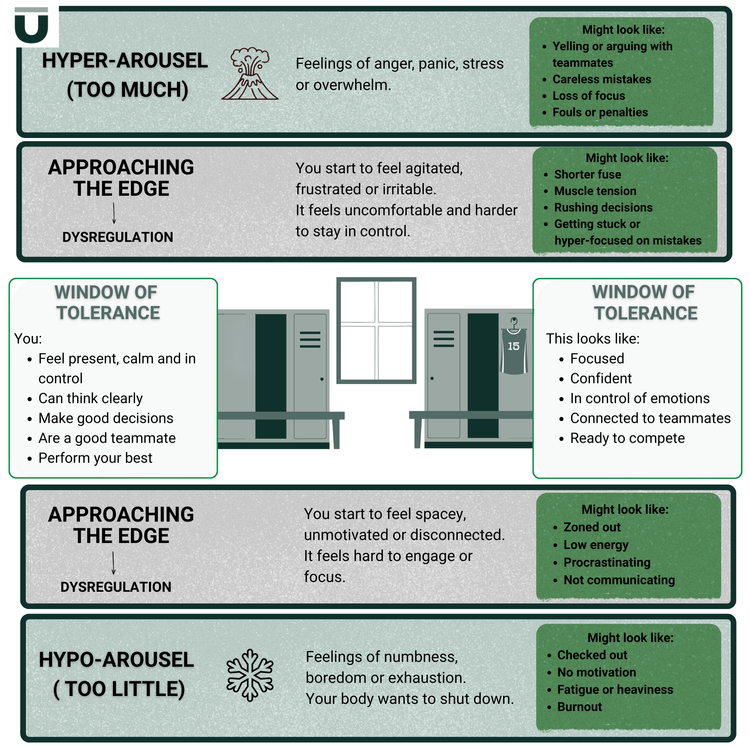
In much of the work we do with athletes and teams, we talk about the window of tolerance—the zone where you are regulated enough to think clearly, stay present, and perform at your best.

  • Inside the window: You’re focused, composed, and responsive.

  • Above the window (hyperarousal): You feel overwhelmed—angry, anxious, reactive. This is the fight-or-flight response.

Below the window (hypoarousal): You shut down—low energy, disengaged, checked out. This is the freeze response.

Competition constantly pushes athletes toward the edges of that window. The goal isn’t to avoid big emotions—it’s to learn how to stay within range of them. Because when you get stuck outside your window, performance usually follows.

When Athletes Leave Their Window

Even elite athletes at the highest levels lose control sometimes—not because they lack skill, but because they momentarily fall outside their window.

Take Draymond Green. His intensity is part of what makes him great, but it has also led to technical fouls, ejections, and suspensions—including a pivotal moment in the 2016 NBA Finals when his absence shifted the momentum of the series.

Or Serena Williams in the 2018 US Open Final. A dispute with the umpire escalated into multiple penalties, impacting the outcome of the match.

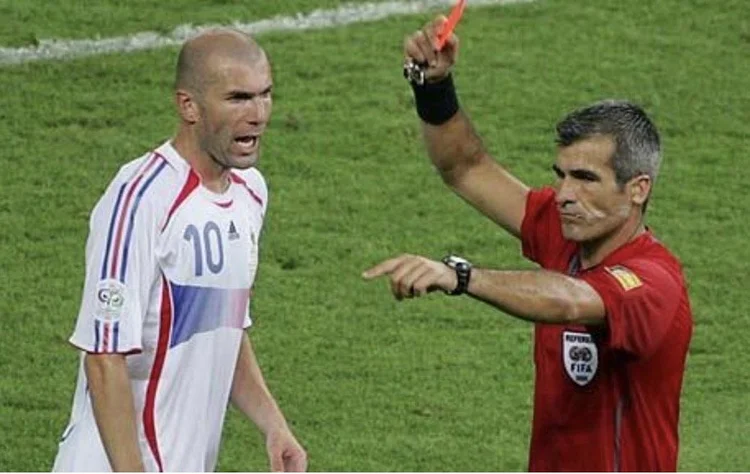
In soccer, one of the most striking examples came from Zinedine Zidane in the 2006 FIFA World Cup Final. In the final match of his career, Zidane reacted to provocation by headbutting an opponent—earning a red card and ejection. France went on to lose in a penalty shootout. One moment, outside his window, changed the ending of an iconic career.

At the youth and high school level, it shows up in ways that feel smaller—but matter just as much:

  • A player commits a frustration foul after a turnover

  • A goalie slams their stick after giving up a goal

  • A midfielder stops communicating after a mistake

  • A coach or parent yells at a referee

  • A runner, exhausted and frustrated after falling in the mud, starts thinking about quitting.

These aren’t just “bad decisions”—they’re nervous system responses.

What’s Happening in the Body

When athletes move above their window, the brain shifts into a threat response:

  • Heart rate spikes

  • Vision narrows

  • Thinking becomes reactive instead of strategic

In that state, the body is preparing to fight—not to execute.

The problem? Most sports require precision under pressure, not emotional reaction.

Training the Skill

Managing emotions isn’t about “just calming down.” It’s a skill—one that can be trained just like shooting, passing, or footwork.

Build a Bigger Window
The size of your window matters.

  • Sleep, hydration, and mindfulness help expand it

  • Stress, anxiety, and fatigue shrink it

Recognize Your Early Signs
Awareness is the first step. Every athlete has cues that they’re drifting:

  • Tight shoulders

  • Arguing or talking to refs/opponents

  • Rushing decisions

Reset in Real Time
Simple, repeatable actions can bring you back:

  • One deep breath (long exhale)

  • Physical reset (adjust gear, fix posture)

  • Visual reset (pick a target, reconnect to the field)

Stay Connected
Emotion pulls athletes inward. Performance requires connection outward:

  • Communicate with teammates

  • Make the next simple play

  • Re-engage with the system—not the mistake

The Real Goal

The goal isn’t to eliminate emotion.

The best athletes feel deeply—they care, they compete, they bring intensity. The difference is that they’ve trained themselves to feel without losing control.

Games are rarely lost on talent alone. They’re often lost in the moments when emotion takes an athlete out of their window—and out of the play.

Every athlete will get pushed outside their window at some point. That’s part of competition.

What matters most is how quickly you can recognize it—and reconnect to your team and the moment.

The Resilience Report

We are always watching sports and it’s not hard to find examples of moments when mental fitness is on full display.  Each month we will feature a story or example of one of these moments.


At the 2026 Masters Tournament, Scottie Scheffler found himself in a position that would derail most athletes.

After two rounds, he was 12 strokes behind the leader—essentially out of contention in one of the most mentally demanding tournaments in sports.

Instead of pressing, forcing shots, or letting frustration take over, Scheffler did something different:

He stayed inside his window.

Over the final two rounds, he played bogey-free golf, executing with patience, discipline, and emotional control—eventually finishing just one stroke short of winning the entire tournament.

That’s what it looks like to stay inside your window when everything around you says to panic.


Playbook: 

The window of tolerance concept has resonated with athletes and coaches across the country this year. If you’re interested in learning more—or exploring how to better manage your own window—we would love to connect with you.

And a quick reminder: this isn’t just a sports skill. The window of tolerance shows up everywhere in life… just ask my kids when I’m navigating the middle school pickup line.

What We’re Watching

Chasing Sub 2: The Journey of Sebastian Sawe’s Historic 1:59:30 Marathon

Chasing Sub 2: The Journey of Sebastian Sawe’s Historic 1:59:30 Marathon tells the story behind one of the most ambitious goals in endurance sports: breaking the two-hour marathon barrier in an official race.

The film follows Sabastian Sawe as he chases that mark, culminating in his historic 1:59:30 performance. But what makes this documentary compelling isn’t just the result—it’s the process. Viewers are taken from high-altitude training camps in Kenya to innovation labs in Germany, and finally to race day in London, showing how preparation, technology, and mindset all intersect.

Narrated by Haile Gebrselassie, the story also highlights the broader, long-term pursuit of what once seemed impossible—a goal that has been chased for decades.

Why it’s worth watching: this isn’t just about running fast. It’s about patience, precision, and staying mentally steady over time. The film is a powerful reminder that breakthrough performances aren’t just built on talent—they’re built on the ability to stay composed, disciplined, and connected to the process when the stakes are highest.

Want to book a consult? Do that here!

 Join Now 

Endure Athletic Mental Ftiness

5974 Jarmans Gap Road, Crozet VA 22932, USA

Powered by Squarespace

Unsubscribe