|
September 2026 Newsletter from Endūre ͏ ͏ ͏ ͏ ͏ ͏ ͏ ͏ ͏ ͏ ͏ ͏ ͏ ͏ ͏ ͏ ͏ ͏ ͏ ͏ ͏ ͏ ͏ ͏ ͏ ͏ ͏ ͏ ͏ ͏ ͏ ͏ ͏ ͏ ͏ ͏ ͏ ͏ ͏ ͏ ͏ ͏ ͏ ͏ ͏ ͏ ͏ ͏ ͏ ͏ ͏ ͏ ͏ ͏ ͏ ͏ ͏ ͏ ͏ ͏ ͏ ͏ ͏ ͏ ͏ ͏ ͏ ͏ ͏ ͏ ͏ ͏ ͏ ͏ ͏ ͏ ͏ ͏ ͏ ͏ ͏ ͏ ͏ ͏ ͏ ͏ ͏ ͏ ͏ ͏ ͏ ͏ ͏ ͏ ͏ ͏ ͏ ͏ ͏ ͏ ͏ ͏ ͏ ͏ ͏ ͏ ͏ ͏ ͏ ͏ ͏ ͏ ͏ ͏ ͏ ͏ ͏ ͏ ͏ ͏ ͏ ͏ ͏ ͏ ͏ ͏ ͏ ͏ ͏ ͏ ͏ ͏ ͏ ͏ ͏ ͏ ͏ ͏ ͏ ͏ ͏ ͏ ͏ ͏ ͏ ͏ ͏ ͏ ͏ ͏ ͏ ͏ ͏ ͏ ͏ ͏ ͏ ͏ ͏ ͏ ͏ ͏ ͏ ͏ ͏ ͏ ͏ ͏ ͏ ͏ ͏ ͏ ͏ ͏ ͏ ͏ ͏ ͏ ͏ ͏ ͏ ͏ ͏ ͏ ͏ ͏ ͏ ͏ ͏ ͏ ͏ ͏ ͏ ͏ ͏ ͏ ͏ ͏ ͏ ͏ ͏ ͏ ͏ ͏ ͏ ͏ ͏ ͏ ͏ ͏ ͏ ͏ ͏ ͏ ͏ ͏ ͏ ͏ ͏ ͏ ͏ ͏ ͏ ͏ ͏ ͏ ͏ ͏ ͏ ͏ ͏ ͏ ͏ ͏ ͏ ͏ ͏ ͏ ͏ ͏ ͏ ͏ ͏ ͏ ͏ ͏ ͏ ͏ ͏ ͏ ͏ ͏ ͏ ͏ ͏
|
Every team wants to have a successful season. They want to win games. Reach their goals. Improve. Compete when the pressure is on. So, naturally, teams spend a lot of time preparing for those things. They practice skills. Develop game plans. Lift weights. Watch film. Work on conditioning. Coaches think strategically about lineups, systems, and how to get the most out of their players. But there is another part of preparation that can be easy to overlook: How safe and connected do the people on the team feel with one another? Before athletes can fully take risks, learn from mistakes, receive feedback, communicate honestly, or bring their best energy to a team, they need to feel like they belong there.
|
Safety Is Not the Same as ComfortWhen we talk about safety on a team, we are not talking about creating an environment where no one is challenged, no one gets corrected, or everyone gets to hear only positive things. In fact, some of the strongest teams have incredibly high standards. Safety means something different. It means athletes can make a mistake without wondering if they are about to be humiliated. It means they can ask a question without feeling stupid. They can admit when they do not understand something. They can take a risk without feeling like one failure will change how everyone sees them. They can hear, “You need to be better here,” and still know, “I am valued here.” That distinction matters. When athletes feel unsafe—whether because they fear embarrassment, exclusion, ridicule, or losing the approval of a coach or teammates—they often shift their energy toward self-protection. Instead of asking, “What do I need to do to get better?” they may start asking: And when self-protection becomes the priority, growth can become much harder.
|
Connection Gives Athletes Somewhere to LandThink about the teams you have been part of—or the teams you have watched from the outside. The ones that stand out are not always the teams with the most talent. Sometimes they are the teams where players genuinely enjoy being together. Where teammates celebrate one another. Where people notice when someone is struggling. Where athletes can laugh together after a tough practice, recover from a mistake, and feel that they are part of something bigger than their individual role. Connection creates a sense of, “We are in this together.” And that can change the way athletes experience an entire season. When players feel connected, they may be more willing to communicate. More likely to encourage a teammate. More comfortable addressing tension rather than letting it simmer. More willing to sacrifice for the group. Perhaps most importantly, connection can give athletes the confidence to be fully themselves. That does not mean everyone on a team needs to become best friends. It does mean that every athlete should have reason to believe: I belong here. I matter here. My teammates and coaches see me as more than what I can produce.
|
A Small Moment That Changed How I Saw BelongingI experienced the power of that kind of connection during my first semester of college at JMU. That semester was filled with homesickness, anxiety, and a crisis of confidence. One Sunday morning, during a long run through the woods, I fell off the lead group. Of course, I immediately assumed it meant I was failing, that I did not belong there, and that everyone else could see it. One teammate was kind enough to stay with me. With tired legs and difficult terrain, I tripped and fell about four miles from the finish—face-first into a puddle of mud. My first and loudest thought was how embarrassed I would be when I finally finished, and the rest of the team saw me looking like a complete mess. I lay there for a moment before getting back up. Then my teammate asked, “What can I do to make this better?”
|

|
I told her I was embarrassed. Without hesitation, she lay down in the mud and covered herself until she looked just as messy as I did. We finished the run together and managed to laugh for the rest of the way. I will never forget that kindness. When we reached the finish, none of the other runners made a big deal about our appearance. Everyone just wanted to eat a banana and get out of there. But something had shifted for me. I had been worried that falling behind and falling into the mud would prove I did not belong. Instead, one teammate’s response reminded me that I did not have to be perfect to be part of the team. From then on, I became less afraid of what other people might think—and more willing to take risks, make mistakes, and trust that I still belonged. |
|
|
|
That moment was small. It did not change my ability overnight or eliminate every insecurity. But it changed the way I experienced my teammates. I felt less like I was being evaluated from the outside and more like I was supported from within the group. That is what connection can do.
|
The Coach-Athlete Relationship Matters, TooFor many athletes, a coach has an enormous influence on whether the team environment feels safe or threatening. Athletes pay attention to what happens after mistakes. They notice how a coach responds when someone is struggling. They notice who gets listened to. They notice whether feedback feels like instruction or humiliation. They notice whether they are only acknowledged when they perform well. This does not mean coaches need to soften expectations. Quite the opposite. Athletes can often handle difficult feedback and high expectations when they trust the person delivering them. A player may be much more receptive to hearing, “That decision wasn't good enough,” when the relationship underneath the feedback communicates, “And I believe you can learn from it.” The goal is not connection instead of accountability. The goal is connection that makes accountability more effective.
|
Connection Is a Competitive AdvantageIt is easy to think of team dinners, icebreakers, conversations, and moments of connection as the things teams do around the important work. But what if they are part of the important work? What if learning one another's stories helps teammates give each other more grace? What if trust makes feedback easier to hear? What if feeling like you belong allows you to play with more freedom? What if knowing that your teammates have your back makes it easier to take a risk? A connected team will not suddenly become immune to adversity. There will still be losses, mistakes, frustration, conflict, and disappointment. But connection can influence what happens when those moments arrive. Do players turn on one another—or toward one another? Do they hide mistakes—or learn from them? Do they become afraid to fail—or stay willing to take the next risk? Do they protect themselves—or remember that they are part of something bigger? My experience in the woods was a small example of this choice. My teammate could have continued on without me. She could have made me feel like I was slowing her down. Instead, she stayed, met me in the moment, and helped turn embarrassment into laughter. That kind of response does not just make a difficult moment easier. It can change what an athlete believes is possible the next time something goes wrong.
|
The Work Starts Before the Season Gets HardBuilding safety and connection is not something teams should wait to do until there is a conflict or a losing streak. It is built in small moments. It is built when coaches learn about their athletes as people. When teammates check in with one another. When someone makes a mistake and the response is constructive rather than cruel. When athletes are invited to use their voices. When expectations are clear. When accountability is paired with respect. It is built through hundreds of small interactions that communicate: You belong here. You can make mistakes here. You will be challenged here. And you do not have to earn your worth on this team every single day. Sometimes those interactions are intentional: a team conversation, a check-in, or an activity designed to build trust. Other times, they happen spontaneously—a teammate staying behind, offering encouragement, or choosing compassion when someone is struggling. Either way, the message matters. Talent matters. Preparation matters. Strategy matters. But if a team wants to get the most out of the people on its roster, it may be worth asking a different question before the season begins: What are we doing to make sure our athletes feel safe enough to take risks—and connected enough to take care of one another? Because sometimes the foundation for a successful season is not just built through what a team practices. It is built through how the team learns to be together.
|
|

|
The Resilience ReportWe are always watching sports and it’s not hard to find examples of moments when mental fitness is on full display. Each month we will feature a story or example of one of these moments.
|
|
|
|
|
Howard Women’s Lacrosse — When Connection Becomes a Competitive Advantage What happens when a team decides that vulnerability is not a weakness—but a strength? For the Howard University women’s lacrosse team, that question has become part of their journey over the past two seasons. The Bison have been working with Endūre for the past two years, intentionally building mental fitness skills alongside their physical and tactical preparation. A major focus has been creating a team environment where players feel safe enough to be vulnerable, connected enough to support one another, and equipped with strategies to navigate difficult moments. During their first season working with Endūre in 2025, Howard won its first Division One game in 13 years. Then came another step forward in 2026: the Bison won three games, while also narrowly losing three others—two by just two goals and one by a single goal. The numbers tell an important story….but perhaps the more meaningful change has been in how the team experiences adversity together. Howard Head Coach Karen Silcott-Healy describes the impact this way: “We learned a variety of skills that we have been able to use differently based on our opponents and for each player as individuals on and off the field. The players really understood how important it was to approach the game from all angles and have systems and support for when things got hard.” That last part matters. Because every team is going to have moments when things get hard. There will be mistakes. Momentum shifts. Tough opponents. Disappointing losses. Players who are struggling. Moments when confidence disappears. Mental fitness is not about preventing those moments. It is about helping athletes and teams have a plan for what they will do when those moments inevitably arrive.
|
|
For Howard, that work has included developing a shared language and a collection of skills that players can draw upon both individually and collectively. Just as importantly, they have continued to build the kind of team environment where athletes can be honest about what they are experiencing and trust that their teammates will meet that vulnerability with support rather than judgment. That connection can become especially powerful when the game gets difficult. When players know they can make a mistake and still belong, they have more freedom to take the next risk. When they trust their teammates, they can communicate rather than retreat. When they have systems for managing difficult moments, they can spend less energy trying to hide their struggle and more energy figuring out what they need to do next.
And when athletes feel connected to one another, resilience becomes something the team can practice together, rather than something every player has to figure out alone. Silcot-Healy has noticed that shift not only during games, but in the way the team has approached its preparation. “I have seen a huge change in how the team approached this summer and stayed connected which has led to the most cohesive start to fall ball that we have ever had.”
That may be the most exciting part of Howard’s progress. The wins matter. The close games matter. The statistical improvement matters. But the foundation underneath those results matters, too.
Howard is demonstrating that creating safety and space for vulnerability can give athletes the freedom and confidence to compete more fully. A team does not become resilient because it never struggles. It becomes resilient because its players learn that when things get hard, they have somewhere to turn, skills they can use, and people who will help them find their way forward. For Howard women’s lacrosse, connection has become more than something that feels good off the field. It is becoming part of how they compete. And that may be one of the most powerful competitive advantages a team can build.
|
Playbook: Is Your Season Getting Started?A new season brings excitement, anticipation, and opportunity—but it also brings challenges. Endūre is here to help your team navigate all of it. Our Season of Support gives teams an all-access pass to the mental fitness and mental health resources Endūre offers throughout the season. Rather than a one-time presentation, we can work alongside your team as needs evolve.
|

|
A Season of Support can include:Team presentations focused on mental fitness skills and team dynamics Small-group discussions that create space for connection, vulnerability, and shared learning One-on-one sessions for athletes or coaches who could benefit from additional support Flexible support throughout the season as your team navigates the inevitable ups, downs, and unexpected challenges of competition
|
|
|
|
Every team is different, and the goal isn't to provide a one-size-fits-all program. We want to understand your team, your goals, and the challenges you anticipate this season—and then figure out what would be most helpful. Because building a mentally fit team isn't something you do once. It's something you build together, all season long. Reach out to us today to talk about what a Season of Support could look like for your team.
|
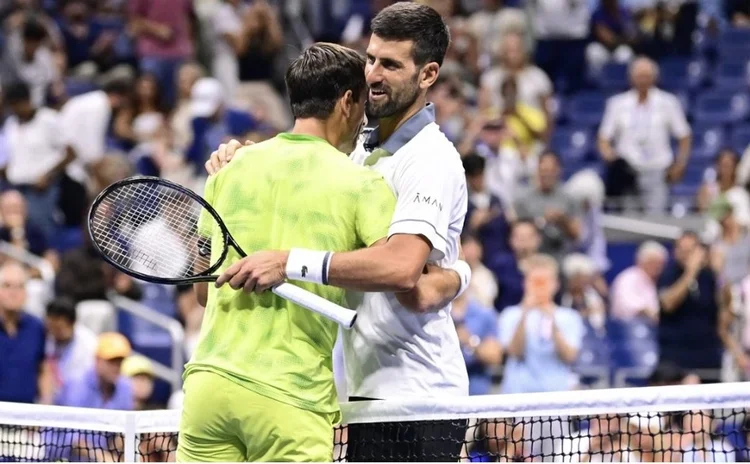
What We’re WatchingThe US Open, of course! Since I am not a quitter, I stayed up until after midnight watching Mariano Navone beat Novak Djokovic in the first round of the tournament. And honestly? This is everything I love about sports.
|
|
Can you even imagine playing tennis for five hours under that kind of pressure?! The physical demands alone are incredible, but add the mental battle of competing point after point, set after set, knowing that one small shift in focus can change everything. There is something so fascinating about watching athletes navigate those moments—the nerves, the momentum swings, the mistakes, the comebacks, and the constant challenge of staying in the present.
And that is why we will be watching.
The US Open is already delivering the drama, and we are here for all of it. Keep it coming—we can’t wait!
|
Want to book a consult? Do that here!
|
|
|
|